
Handshake AI is one of those tools that sounds simple at first, but the impact can be huge. It sits in a growing space where human expertise meets powerful AI models. Instead of only using random internet text, many modern AI systems now need high-quality expert feedback. That’s exactly where Handshake AI steps in.
Students, graduates, and professionals often ask the same thing: “How do AI models actually get better?” The short answer is data and feedback. The longer answer is that smarter AI needs smarter training. That’s why Handshake AI matters right now.
This guide explains Handshake AI in simple language. You’ll learn what it is, how it works, why it’s trending, and who can benefit from it. You’ll also get practical tips, common mistakes to avoid, and a detailed FAQ. Let’s keep it clear, useful, and easy to read. ✅
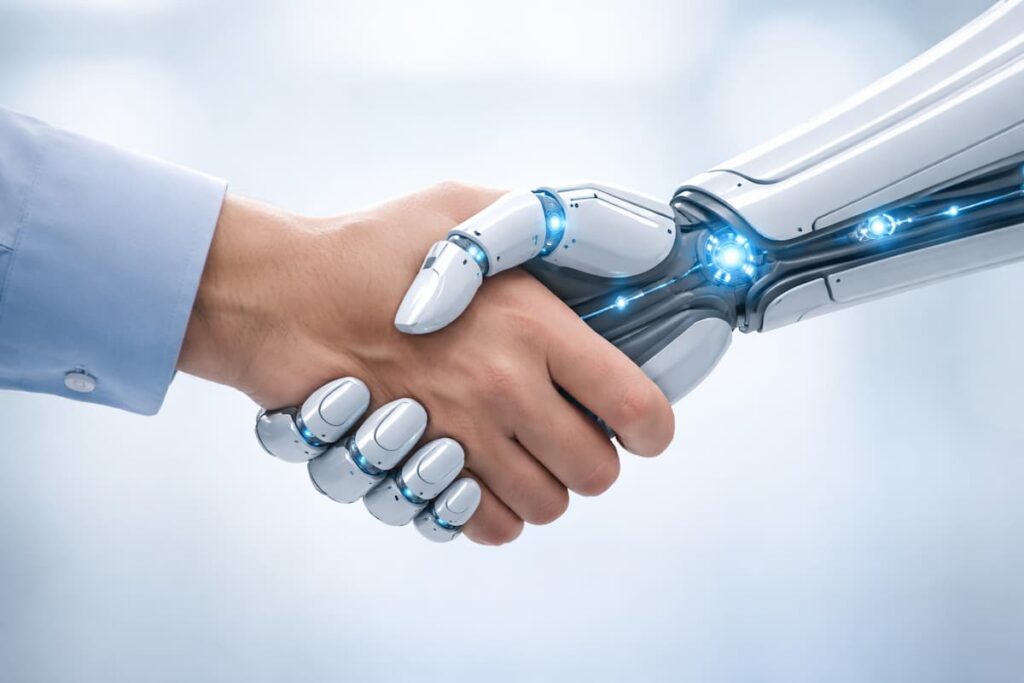
What Is Handshake AI? 🤝💡
Handshake AI is a platform and service that connects real experts with AI labs and companies that need high-quality human input. Think of it as “expert feedback for AI.” Rather than guessing what’s correct, AI teams can ask knowledgeable people to evaluate, test, and improve model behavior.
Handshake AI is different from basic “data labeling.” It can involve deeper work like:
- checking if a model answer is correct ✅
- finding hidden errors in logic 🔎
- testing if responses follow rules and safety 🧩
- improving clarity and accuracy for hard topics 📘
- creating better examples for training 🧠
So, Handshake AI is not mainly about generating content. It’s more about improving the quality of AI systems through real human validation.
Why Handshake AI Feels Revolutionary Right Now 🚀
AI has moved fast. A lot of models already learned from broad internet data. However, that “easy data” is not enough anymore. Advanced models now need specialized knowledge and careful evaluation.
That shift is why Handshake AI feels revolutionary:
- AI teams want expert-level feedback, not guesswork
- Companies want higher accuracy in complex subjects
- Users demand trustworthy answers, not confident mistakes
- The AI race rewards quality, not just speed
In other words, Handshake AI is part of a new phase: training AI with human experts, not just general text.
How Handshake AI Works (Simple Step-by-Step) 🧭
Handshake AI usually follows a clean workflow. The exact tasks can vary, but the idea stays similar.
1) Experts join and create a profile 🧑🏫
Experts share their background, education, and skills. This helps match them to the right tasks.
2) Projects match experts to AI needs 🎯
A lab might need help in math, chemistry, finance, coding, writing, or other fields. Handshake AI connects the right people to the right project.
3) Experts evaluate or create high-quality feedback ✅
Experts might review model outputs, mark what is correct, suggest improvements, or test edge cases.
4) AI teams use that feedback to improve models 🔁
The feedback becomes part of training, validation, and refinement.
Because of this loop, Handshake AI can directly influence how AI behaves in real products.
Handshake AI Use Cases You’ll Actually Understand 🌟
Handshake AI can be used in many practical ways. Here are easy examples.
Handshake AI for accuracy testing ✅
AI models can “sound right” while being wrong. Experts use Handshake AI to catch those mistakes.
Handshake AI for complex reasoning 🧠
Hard questions need careful logic. Experts can judge whether reasoning is valid, not just the final answer.
Handshake AI for safe behavior 🛡️
Some tasks focus on whether the model follows rules, avoids harmful outputs, and responds responsibly.
Handshake AI for better explanations 📚
Experts can help models explain concepts in a simpler way, which improves learning experiences for users.
Handshake AI for specialized domains 🧪
Subjects like medicine, law, engineering, and accounting often require trained judgment. Handshake AI helps bring that into model training.
Who Is Handshake AI For? 🎓👩💻👨🔬
Handshake AI can help different types of people, depending on how they use it.
For AI labs and companies
- stronger model quality
- fewer “wrong but confident” answers
- better performance in specialized topics
- improved user trust
For experts and professionals
- a way to apply knowledge in real AI projects
- flexible work style (depending on the project)
- exposure to cutting-edge AI work
- skill-building in evaluation and testing
For students and graduates (in some cases)
Some roles may involve structured evaluation or training tasks that match their education level. Still, advanced tasks typically require proven expertise.
Handshake AI is not only for one group. It’s a bridge between people who know a subject and AI teams building tools that must be right.
Handshake AI Benefits That Matter ✅✨
Let’s keep it real. Tools are only “revolutionary” if they solve real problems.
Handshake AI can help solve these big issues:
- Higher accuracy: expert review improves correctness
- Better reasoning: specialists spot flawed logic
- Clearer output: experts improve explanation quality
- Faster improvement: feedback loops speed up model refinement
- More trust: users get fewer confusing or misleading answers
Handshake AI supports a simple goal: make AI less random and more reliable.
Handshake AI vs Traditional Data Labeling (Key Difference) 🔍
Traditional labeling often looks like: “Is this image a cat or not?” That’s simple classification.
Handshake AI can be deeper:
- “Is this solution to a calculus problem valid?”
- “Does this legal explanation miss an important exception?”
- “Is this medical summary safe and clearly worded?”
So, Handshake AI is closer to expert review than basic tagging.
Common Tasks You Might See in Handshake AI 🧾
Exact tasks depend on the project, but common categories include:
- rating answers for correctness ⭐
- improving responses for clarity ✍️
- checking for missing steps in reasoning 🧠
- creating better examples or test cases 🧪
- reviewing outputs for safety and policy 🛡️
- comparing two answers and choosing the best one ⚖️
This is why Handshake AI often attracts people who like structured thinking.
Handshake AI: What to Watch Out For ⚠️
Every platform has trade-offs. Handshake AI is no exception.
Here are realistic challenges:
- Project availability can vary by region and skill
- Some tasks may require strict guidelines and training
- Quality expectations can be high
- Work may feel repetitive on some projects
- Not every task matches every expert equally well
Also, some people prefer creative work, while others prefer evaluation work. Handshake AI is often more “review and refine” than “create anything you want.”
How to Get Better Results With Handshake AI (If You’re an Expert) 🧠✅
If you plan to participate, your approach matters.
Keep your feedback clear and specific
Short feedback is fine, but it should be precise. Mention what is wrong and how to fix it.
Explain “why,” not only “what”
A useful review says why a step fails. That helps training more than a simple thumbs-down.
Follow guidelines like a checklist
Many projects use strict rubrics. Sticking to them improves consistency and scoring.
Stay consistent across tasks
Consistency is valuable. It helps AI teams trust the feedback and measure progress.
Handshake AI rewards careful thinking. It also rewards clear writing.
Handshake AI: A Simple Quality Checklist 🧾✨
Whether you are reviewing answers or comparing outputs, this checklist helps:
- Is the answer correct? ✅
- Is the logic valid from start to end? 🧠
- Are there missing steps? 🔍
- Is the explanation easy to understand? 🙂
- Does it avoid risky or unsafe claims? 🛡️
- Is the tone appropriate for the user? 🎯
Using a checklist keeps your work fast and clean.
Why Handshake AI Matters for the Future of Jobs 💼🌍
AI is changing work. Some jobs will shift. New jobs will appear. Roles that combine human judgment with AI tools are growing.
Handshake AI sits inside that new world:
- Human expertise becomes a product
- Validation becomes valuable work
- Specialized knowledge gets rewarded
- AI becomes more aligned with real needs
This also creates a new kind of “AI economy” where people contribute to training, testing, and improving systems used by millions.
Handshake AI is not only a tool. It’s a signal of where the market is going.
Mistakes People Make With Handshake AI 😬
These mistakes can reduce quality or slow progress:
- Rushing feedback without reading carefully
- Ignoring rubrics or project rules
- Using vague comments like “bad answer”
- Focusing only on the final result, not reasoning
- Being inconsistent across similar tasks
Better habit: slow down for accuracy, then speed up with practice.
Handshake AI Tips for Students Who Are Curious 🎓💡
If you’re a student reading this, focus on skills that match the Handshake AI world:
- Learn how to explain your reasoning clearly
- Practice checking answers for correctness
- Get comfortable with rubrics and scoring
- Improve writing clarity and structure
- Build one strong domain skill (math, coding, science, finance, etc.)
Strong basics + clear thinking can open doors later.
Handshake AI is not only about “knowing facts.” It’s about judging quality.
FAQ: Handshake AI ❓🤝
1) What is Handshake AI in simple words?
Handshake AI is a platform that connects experts with AI companies that need high-quality human feedback. Experts review, test, and improve AI outputs so models become more accurate, clear, and reliable.
2) What makes Handshake AI different from a normal AI chatbot?
A chatbot helps end users by answering questions. Handshake AI helps AI builders by improving how models learn. Instead of chatting for fun, Handshake AI focuses on evaluation, validation, and expert-level feedback.
3) Who can benefit most from Handshake AI?
Handshake AI benefits AI labs that need quality improvements and experts who want to apply their knowledge in AI projects. It can also benefit advanced students or graduates if the work matches their skill level and project needs.
4) What kinds of tasks happen on Handshake AI?
Tasks can include rating answers, checking correctness, improving clarity, testing reasoning, creating examples, and comparing outputs. The common theme is quality control for AI behavior.
5) Is Handshake AI only for STEM fields?
No, but STEM is common because it needs precision. Handshake AI can also include work in writing, business, education, and other domains where expert judgment improves results.
6) Is Handshake AI reliable for building better AI?
Handshake AI can be valuable because expert feedback is one of the strongest ways to improve advanced models. Consistent, high-quality human review helps reduce errors and improve explanations, especially in complex topics.
7) How can I use Handshake AI without feeling overwhelmed?
Start with a simple routine: read the rubric carefully, do fewer tasks with higher focus, and use a checklist. Over time, your speed improves naturally while your quality stays strong.